

How to Attract Hummingbirds to your Garden

We believe every garden is better with a few hummingbirds zipping through! These energetic little birds aren’t just beautiful—they’re also important pollinators for many plants.
Whether you’re just starting your garden or looking to add a few more blooms, attracting hummingbirds is a rewarding way to bring even more life and color to your outdoor space. Let’s dive into the plants, tips, and fun facts that will help you welcome hummingbirds back to your garden year after year.
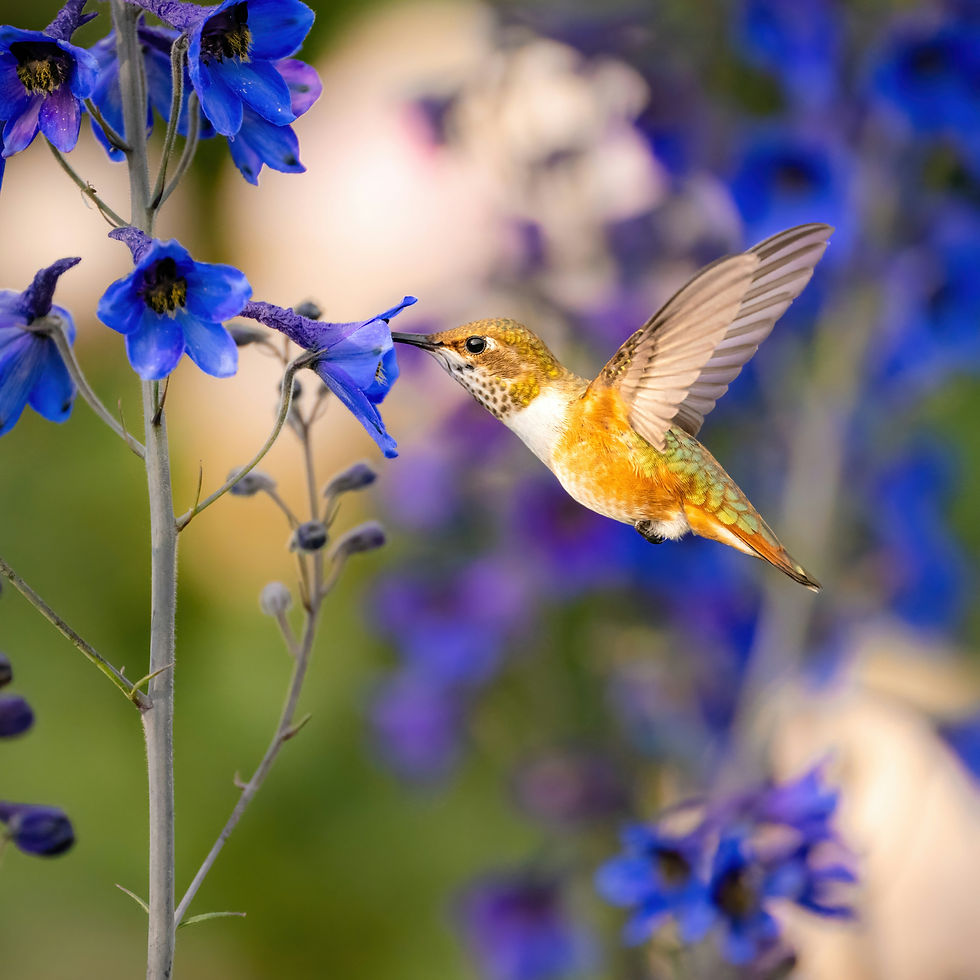
Plants That Attract Hummingbirds
Hummingbirds are naturally drawn to brightly colored, tubular flowers rich in nectar. To keep them coming back all season long, aim for continuous blooms from spring through fall using a mix of bulbs, annuals, perennials, and vines.
Bulbs:
Crocosmia
Gladiolus
Tuberous Begonia
Dahlia
Canna
Annuals:
Petunias
Zinnias
Pineapple Sage
Red Salvia
Snapdragons
Fuchsia
Geraniums
Impatients
Perennials:
Columbine
Bee Balm (Monarda)
Penstemon
Lupine
Phlox
Lilly
Rose Meadow
Foxglove
Hosta
Vines:
Trumpet Vine
Honeysuckle (Lonicera)
Clematis
Morning Glory
Wisteria
Looking for these plants? We carry many hummingbird-friendly options right here at Good News Gardening. Stop by and let us help you build a pollinator-friendly garden tailored to our Hood River climate.
In addition to planting flowers, adding a hummingbird feeder is a great way to attract even more of these tiny visitors to your garden. The perfect nectar recipe is simple: mix 1 part white sugar to 4 parts water. (No need to add red dye—your flowers and feeder will do the attracting naturally!)
For easy feeding, we also carry instant hummingbird nectar here at Good News Gardening—just mix with water and fill your feeder. Stop by to grab everything you need to keep your hummingbirds happy and healthy all season long!
Fun Hummingbird Facts
Hummingbirds beat their wings up to 80 times per second.
They can fly in every direction—including backward and upside down.
Despite their tiny size, they migrate thousands of miles each year.
Their favorite color? Red! (Which is why so many hummingbird feeders and flowers come in red hues.)
A hummingbird’s heart can beat over 1,200 times per minute during flight!

They'll Be Back - Year after Year!
One of the most magical things about hummingbirds? They remember where the good nectar is. Hummingbirds often return to the same gardens year after year, especially if they find a consistent food source, water, and shelter. Once you’ve rolled out the welcome mat, you may find you have some repeat visitors!
Keep your garden hummingbird-friendly by:
Providing fresh water in a shallow birdbath or mister
Offering shade and perches with nearby trees or shrubs
Skipping pesticides (they harm the insects hummingbirds also rely on for protein)
There’s something magical about spotting a hummingbird flit through the garden—tiny, fast, and full of energy. At Good News Gardening, we love helping gardeners create spaces that invite these little pollinators back year after year.
Come See Us at Good News Gardening!
We’re stocked with hummingbird-friendly plants and always happy to help you plan your garden with our local Hood River conditions in mind. Whether you’re starting fresh or adding a few special blooms to your beds, we’ve got everything you need to make your garden a hummingbird favorite.
🪴 Visit us 7 days a week in Hood River. Let’s get your garden buzzing (or humming)!


The idea of keeping personal care simple and thoughtful gives me a reason to slow down and consider the details. A small consistent habit can be easier to assess than several unfamiliar changes introduced together. The name Krasotaizdorove gives this theme a memorable reference point, while personal care ideas keeps the subject in focus. I can imagine different responses depending on the situation, which makes the question more interesting. What would help someone decide which parts of a personal-care routine are useful to them?
Thinking about understanding materials and practical workshop tasks, I find the smaller practical questions more interesting than a quick conclusion. Knowing what a component needs to do can make choosing a material easier to discuss. That practical perspective helps me frame practical technical skills as a theme for Jualpipapvc. The smaller details are what I would want to return to, especially when an explanation feels too broad. Which questions should come before comparing different technical options?
What interests me about building confidence through manageable learning goals is how a broad idea becomes part of an ordinary day. A clear first step can make a difficult subject feel more approachable. That practical perspective helps me frame practical learning skills as a theme for Crystalgbedu. I can imagine different responses depending on the situation, which makes the question more interesting. How do you decide what to practise when a topic initially seems too broad?
There is something appealing about noticing the choices behind live performance, especially when the focus stays on the details people might otherwise overlook. A pause or a change in lighting can alter the way an audience understands a moment. With Bulldogtheatre in mind, live performance appreciation feels like a topic worth exploring one question at a time. I am still thinking through the practical side, because the context can change what seems useful. What would you pay attention to when comparing two performances of the same scene?
For me, exploring wine through taste and context becomes more engaging when there is room for questions as well as explanations. The setting and the food alongside a drink can change what someone notices about it. That is why the connection between Bearcreekwineryalaska and wine appreciation ideas makes me want to think through an example. A simple comparison would help me picture the differences without rushing towards a fixed answer. How would you compare impressions without assuming everyone experiences the same flavours?